
Coffeehouse Features: A conversation with Matt Kazman
The Donkey Director breaks down his film and the personal story behind it.
Coffeehouse Cinema
culture, film, cinema, film community, short films, coffeehouse cinema, filmstack
Welcome to Filmmaker Fridays, where every week we will highlight our Coffeehouse Cinema filmmakers and their amazing projects.
This is long overdue and allows our readers and previous attendees to go one layer deeper on the work that we play at Coffeehouse Cinema. And more importantly, create a greater connection between the filmmakers and the audience.
Today we are starting with none other than Matt Kazman, an LA-based filmmaker from Toronto, who we had the privilege of him screening Donkey: our first short ever screened at Coffeehouse Cinema.
We play films like this every month at Coffeehouse Cinema. Be on the lookout for next weeks Filmmaker Friday and stay tuned for our upcoming event on May 29th.
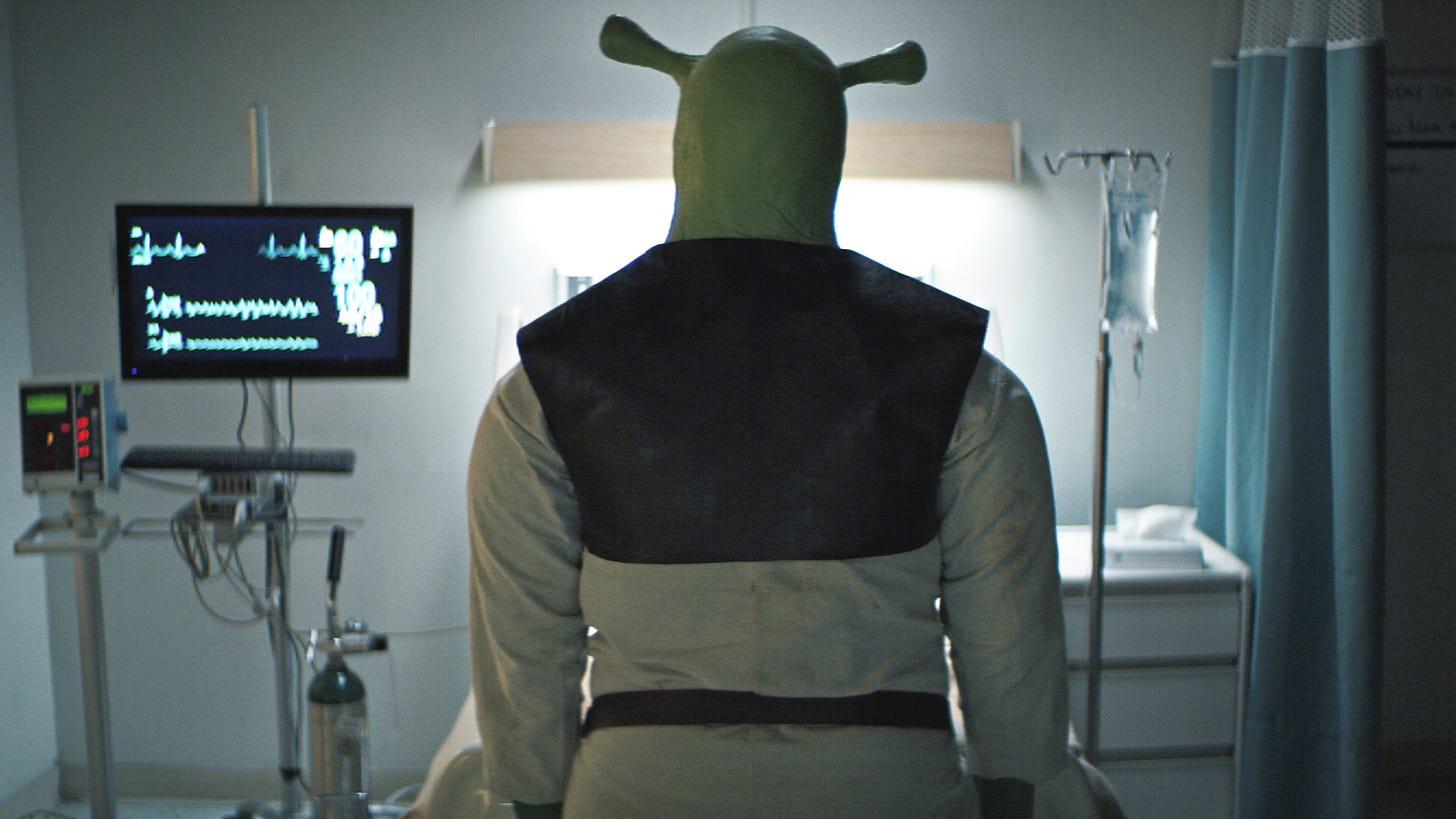
Donkey is an incredible short which not only touches on a son’s difficult relationship with his father, but an artist’s difficult relationship with being seen. Oh and there’s Shrek too.
In the feature below, Matt breaks down what drew him to the project and how the personal story shaped this film.
Thank you Matt for sharing and we hope you all enjoy and become inspired.
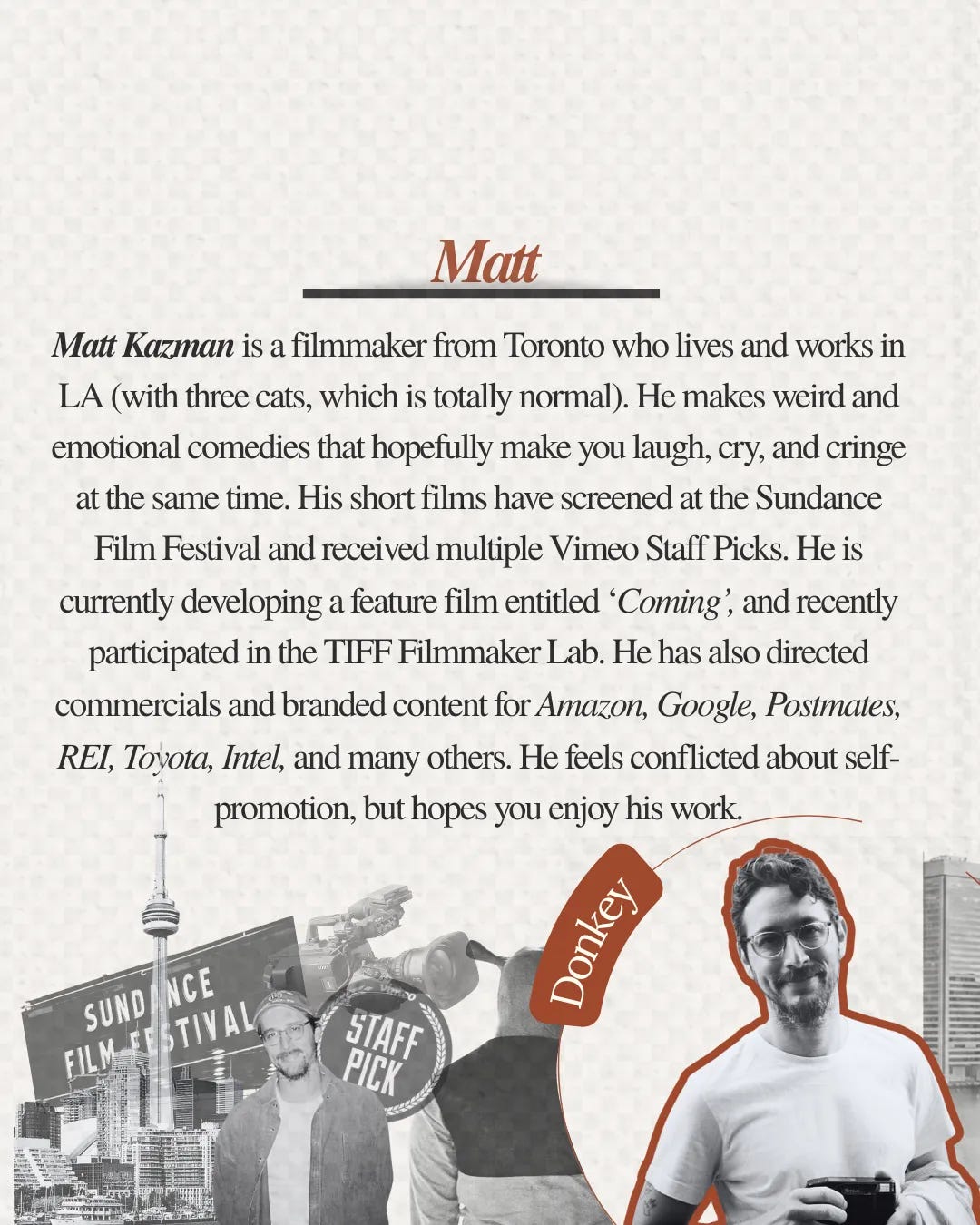
More about Matt below before diving into our conversation!
For people discovering your work through Coffeehouse Cinema, how would you describe this film today?
It’s a film about feeling like a failure, and how you need to get outside of yourself.
What originally drew you to making Donkey?
Honestly, the initial draw towards writing it was that I was depressed and feeling very down on myself, especially career-wise. I knew I wanted to make something about that feeling, but not have it be self-serious or very “woe is me.”
I wanted to poke fun at the feeling so it could have less weight for me. For some reason, I became fixated on this idea of a guy dressed as Shrek while he deals with a genuinely emotional situation. There was a “sad clown” element of it that I really liked. I ended up writing a draft very quickly, because I knew the setup and the ending, and then it became a process of making it less silly and more grounded because that’s the approach I favor.
With the short, I was trying to explore this feeling of being down on yourself and as a result hiding yourself from the outside world (which was very easy to do during COVID) and how that’s not, like, a good thing to do. How there are things going on outside of yourself and if you hide yourself from the people in your life and the outside world, it’s only going to make you feel worse. There’s also an element that I’ve only realized in hindsight which is that it’s a film about letting go of shame and embarrassment. And I think that has only become more relevant to me as the industry has gotten harder for everyone. I used to really care about what people thought of me, particularly in the industry, but I’ve only learned in recent years to let go of that a bit and just be like “we’re all just trying to survive” and that has made my approach to creative projects and connecting with people a lot more genuine. Which in turn has allowed me to be more myself and on the flipside, actually be “seen” more. Which is quite literally what happens to Russell in the short. Sorry for the long answer!
Coffeehouse Cinema is about creating space for intimate stories. Looking back now, what part of this film feels most personal to you?
The part that feels most personal to me is how the character hides from people in his life when he feels down on himself. I think part of why I wanted to make this was to address that bad habit of mine and try to get over it, because when you’re feeling down on yourself, and you hole yourself off from people, you’re only letting that internal negative voice get louder.
Now that some time has passed since you made this film, what about it still surprises you?
I think how much people respond to it still surprises me. I truly had no expectations when I made it. I was just trying to make something a little less cold and a little more vulnerable. And the emotional response specifically has been really nice.
This film centers on being seen and accepted. Where did that theme come from for you?
To be honest, it came from the difficulty I was having being seen and accepted by myself. I have always been my own worst enemy - which is the kind of person I was trying to make Russell. And like I said above, hiding from people was my solve for trying to not feel worse about myself. But in general, as painful and awkward as it can be to face people who you have hidden from, it’s a huge help towards feeling seen or accepted.
Why did telling this story through a costume and through comedy feel like the right way in?
Comedy is kind of my gut approach with everything! Whether it’s using it as a shield, or a way to poke fun at something before making things emotional. I guess it’s both my preferred genre to work in and also something I like to use as a trojan horse for feelings. I kind of couldn’t get the image of a guy dressed as Shrek going through something emotional out of my head. Sometimes when I fixate on very specific jokes like that, I need to see them through, and sometimes it works and sometimes it doesn’t.
The moment between the son and his father is incredibly powerful. What did that recognition mean to you as a storyteller?
Do you mean how the father recognized him? To me, that’s less about a father recognizing a son than it is a small win/reward for Russell finally being vulnerable. So, again, I’m advocating for being vulnerable, because whether you’re using comedy or self-deprecation as a shield, I feel like you need to be vulnerable in order to be seen.
For someone who has felt invisible in their own life, what do you hope this film offers them?
I hope it offers them an opportunity to look outside of themselves.
Thoughts for the readers?
Make movies personal. Even if the plot isn’t something that actually happened to you, it just feels a lot better when you make something that comes from real feelings rather than a “cool idea”.
See you at the Coffeehouse!

